




 | |  | |  | |  | |  | |  | |  | |  |


 |

| Frequently Asked Questions |
 | |  | |  |
To join today or for more information click -here- to contact us.
We look forward to working with you!!!
Respectfully,
Bradley Rhodd
President, United Wisdom, LLC
We look forward to working with you!!!
Respectfully,
Bradley Rhodd
President, United Wisdom, LLC
 | |  | |  | |  |
| Navigation Bar: |
1) What is the purpose of United Wisdom, LLC?.
2) What is the significance of the United Wisdom, LLC logo?
3) How does it work?
4) Is it legal?
5) Why will it work?
6) Has this concept worked before?
2) What is the significance of the United Wisdom, LLC logo?
3) How does it work?
4) Is it legal?
5) Why will it work?
6) Has this concept worked before?
| What is the purpose of United Wisdom, LLC? |
United Wisdom, LLC is dedicated to improving the safety, health, and economic growth in individual communities through identification, notification, and enforcement
of criminal trespass laws upon habitual criminals. The concept is designed to deter criminal behavior and empower residents, businesses, and law enforcement
communities.
The desired effect is to:
1) Improve the image of individual communities and its law enforcement departments,
2) Empower the residents and businesses of communities to play a prominent role in combating criminal behavior in their respective communities,
3) Reduce crime within communities and encourage criminals to either stop the criminal behavior or leave the community,
4) Lower the overall criminal statistics of individual communities, and
5) Stimulate economic growth and business interest in communities by shattering reputations for high crime.
of criminal trespass laws upon habitual criminals. The concept is designed to deter criminal behavior and empower residents, businesses, and law enforcement
communities.
The desired effect is to:
1) Improve the image of individual communities and its law enforcement departments,
2) Empower the residents and businesses of communities to play a prominent role in combating criminal behavior in their respective communities,
3) Reduce crime within communities and encourage criminals to either stop the criminal behavior or leave the community,
4) Lower the overall criminal statistics of individual communities, and
5) Stimulate economic growth and business interest in communities by shattering reputations for high crime.
| What is the significance of the United Wisdom, LLC logo? |
Each portion of the logo is symbolic and has a significant meaning.
1) The logo is set on a red, white, and blue background.
2) The color scheme signifies the core American values and principles embedded in the United Wisdom
alliance.
3) The quill pen is prominently placed in front of the sword, which signifies diplomacy first. The pen
represents the law of the land and the guidelines of the alliance. Although diplomacy comes first, it must
be supported by the actual ability to protect and enforce.
4) The sword represents law enforcement. The sword is not intended to lead the way. Rather, its sole
purpose is one of protection and support of the law.
5) The scales of justice are prominently featured at the forefront in that each item in the foreground
promotes and supports the overall goal of justice.
6) The flame burning atop the scales of justice represents the enlightenment of knowledge and justice.
Once the flame of knowledge and justice is built, support, and fed, the flame is freely transferable to
everything it touches.
7) The outer links of the logo represent the residents and businesses of the community. Once the links
come together, the flame flows freely and is spread throughout the chain.
8) The chain is tied together by the banner displaying the phrase “plures praesentia per unum.” The phrase
is Latin meaning “the presence of many through one.” This is the essence of the United Wisdom alliance
in that each link carries the full force, weight, knowledge, and power of justice contained within the
entire alliance.
1) The logo is set on a red, white, and blue background.
2) The color scheme signifies the core American values and principles embedded in the United Wisdom
alliance.
3) The quill pen is prominently placed in front of the sword, which signifies diplomacy first. The pen
represents the law of the land and the guidelines of the alliance. Although diplomacy comes first, it must
be supported by the actual ability to protect and enforce.
4) The sword represents law enforcement. The sword is not intended to lead the way. Rather, its sole
purpose is one of protection and support of the law.
5) The scales of justice are prominently featured at the forefront in that each item in the foreground
promotes and supports the overall goal of justice.
6) The flame burning atop the scales of justice represents the enlightenment of knowledge and justice.
Once the flame of knowledge and justice is built, support, and fed, the flame is freely transferable to
everything it touches.
7) The outer links of the logo represent the residents and businesses of the community. Once the links
come together, the flame flows freely and is spread throughout the chain.
8) The chain is tied together by the banner displaying the phrase “plures praesentia per unum.” The phrase
is Latin meaning “the presence of many through one.” This is the essence of the United Wisdom alliance
in that each link carries the full force, weight, knowledge, and power of justice contained within the
entire alliance.
United Wisdom, LLC will organize the businesses and residents of communities into alliances. Based upon a person’s habitual criminal conduct, the company will act
fairly, impartially, and as a collective whole to bar and ban each person in the identified group from each property within thealliance. Since the goal is to focus on the
persons committing a substantially disproportionate amount of crimes within the community, the number of habitual criminals should remain below one percent of each
community’s total population. All persons violating the policy will be subject to prosecution under local ordinance or state statute for criminal trespass. Law
enforcement will be authorized to enforce the bar and ban through either arrest or citation.
The businesses and residents participating will prominently post at each entrance to the property a United Wisdom alliance sign. The posting of the signs at each
entrance places the banned persons on notice that they are not welcome on the property and will be subject to arrest if they enter. Each business participating in the
alliance will be listed on a website, which will allow the banned person an up to date reference. In the event a banned person does not have access to the internet, an
updated list of each property will be publicly displayed, either at the police department or courthouse.
United Wisdom, LLC will identify habitual criminals through criminal convictions and arrests, which are part of the public record. Since the concept is designed to
deter criminal behavior and not to punish, guidelines will be in place for reinstatement. Reinstatement will only be allowed if the person demonstrates an acceptable
change in their pattern of behavior.
United Wisdom employees, law enforcement, and court personnel will have the authority to notify identified habitual criminals of the ban. The criminal will be issued a
ban notice. The ban notice will include:
1) The reason for the ban,
2) The length of the ban,
3) The consequences of violating the ban,
4) The method to reinstate their privileges,
5) A picture of the sign that businesses will post, and
6) All other ways to identify properties participating in the alliance.
Once the ban notification is in place, it may be enforced. Of course, participating businesses and other persons may notify law enforcement officials of a criminal
trespass violation. However, law enforcement officials will be empowered to enter the property and make arrests without a separate request from the businesses for
each violation. This will enable law enforcement officials to more thoroughly fulfill their duties, especially in special operations. For example, rather than tailing a
group of known car burglars throughout the city in hopes of catching them breaking into a vehicle, law enforcement officials may arrest the habitual criminals as soon
as they enter the parking lot to look for a car to break into. The same goes for known drug dealers, robbers, sexual predators, thieves, forgers, and the list goes on.
Instead of a car burglary, theft, forgery, or other serious crime, the statistics will correctly reflect a misdemeanor criminal trespass charge. In essence, the idea will
stop the serious crime before it is committed.
fairly, impartially, and as a collective whole to bar and ban each person in the identified group from each property within thealliance. Since the goal is to focus on the
persons committing a substantially disproportionate amount of crimes within the community, the number of habitual criminals should remain below one percent of each
community’s total population. All persons violating the policy will be subject to prosecution under local ordinance or state statute for criminal trespass. Law
enforcement will be authorized to enforce the bar and ban through either arrest or citation.
The businesses and residents participating will prominently post at each entrance to the property a United Wisdom alliance sign. The posting of the signs at each
entrance places the banned persons on notice that they are not welcome on the property and will be subject to arrest if they enter. Each business participating in the
alliance will be listed on a website, which will allow the banned person an up to date reference. In the event a banned person does not have access to the internet, an
updated list of each property will be publicly displayed, either at the police department or courthouse.
United Wisdom, LLC will identify habitual criminals through criminal convictions and arrests, which are part of the public record. Since the concept is designed to
deter criminal behavior and not to punish, guidelines will be in place for reinstatement. Reinstatement will only be allowed if the person demonstrates an acceptable
change in their pattern of behavior.
United Wisdom employees, law enforcement, and court personnel will have the authority to notify identified habitual criminals of the ban. The criminal will be issued a
ban notice. The ban notice will include:
1) The reason for the ban,
2) The length of the ban,
3) The consequences of violating the ban,
4) The method to reinstate their privileges,
5) A picture of the sign that businesses will post, and
6) All other ways to identify properties participating in the alliance.
Once the ban notification is in place, it may be enforced. Of course, participating businesses and other persons may notify law enforcement officials of a criminal
trespass violation. However, law enforcement officials will be empowered to enter the property and make arrests without a separate request from the businesses for
each violation. This will enable law enforcement officials to more thoroughly fulfill their duties, especially in special operations. For example, rather than tailing a
group of known car burglars throughout the city in hopes of catching them breaking into a vehicle, law enforcement officials may arrest the habitual criminals as soon
as they enter the parking lot to look for a car to break into. The same goes for known drug dealers, robbers, sexual predators, thieves, forgers, and the list goes on.
Instead of a car burglary, theft, forgery, or other serious crime, the statistics will correctly reflect a misdemeanor criminal trespass charge. In essence, the idea will
stop the serious crime before it is committed.
| How does it work? |
| Is it legal? |
Yes.
The Kansas statute for criminal trespass is §21-3721 and is closely mirrored by state statutes and ordinances across the nation.
Criminal trespass is, in relevant parts:
1) Entering or remaining upon or in any land,…[or] structure… by a person who knows such person is not authorized or privileged to do so, and:
a. Such person enters or remains therein in defiance of an order not to enter or to leave such premises or property personally communicated to such person by
the owner thereof or other authorized person; or
b. Such premises or property are posted in a manner reasonably likely to come to the attention of intruders…
Businesses may grant the authority of notification to others, which may include law enforcement and court personnel. This is covered by the United Wisdom
guidelines. Habitual criminals will be personally served a ban notice and a picture of the United Wisdom sign. All participating businesses will post the United
Wisdom sign at each entrance signifying their participation in the alliance. This will place habitual criminals on notice of the criminal trespass. Under both the statute
and ordinance, the United Wisdom notification is valid.
A person may be banned from a private property based upon criminal conduct. A private business may ban any person from their properties for any reason, except
for a protected class. The protected classes are race, creed, color, religion, sex, national origin, age, handicap, veteran status, and in the case of rental properties-
familial status. Criminal conduct is clearly not a protected class and may be used as a basis for the criminal trespass.
The rights of private property owners are clearly supported by this nation’s highest Court in that the validity of criminal trespass laws, such as the one in Kansas, is
well-settled and has been upheld by the Supreme Court of the United States. Private properties, even large properties such as shopping malls, should not be confused
with public properties. There is a legally distinct difference.
As the U.S. Supreme Court duly noted in the 1972 landmark case of Lloyd Corp., Limited v. Tanner, “the Constitution by no means requires… an attenuated doctrine
of dedication of private property to public use… (n)or does property lose its private character merely because the public is generally invited to use it for designated
purposes.” 407 U.S. 551, 92 S. Ct. 2219 (1972). The same court continued, “(w)e do say that the Fifth and Fourteenth Amendment rights of private property
owners … must be respected and protected. The Framers of the Constitution certainly did not think these fundamental rights of a free society are incompatible with
each other.” Id., 92 S. Ct. 2198. It is clear the rights of private property owners are respected by the Supreme Court.
More recently, the U.S. Supreme Court upheld the rights of a private property owner to utilize a criminal trespass law. In Virginia v. Hicks, the person banned from
the property argued for the court to apply overbreadth adjudication, in which there would be a suspension of all enforcement of an overinclusive law, namely the
criminal trespass ordinance. The Court wholeheartedly rejected this argument and replied by saying, “…there are substantial social costs created by the overbreadth
doctrine when it blocks application of a law to … constitutionally unprotected conduct.” 539 U.S. 113, 123 S. Ct. 2191 (2003). Essentially, the court held that the
conduct of criminal trespass is not protected under the constitution and to hold otherwise would impose a substantial social cost to society as a whole. Once again,
the U.S. Supreme Court upheld the rights of private property owners to utilize criminal trespass laws.
The Kansas statute for criminal trespass is §21-3721 and is closely mirrored by state statutes and ordinances across the nation.
Criminal trespass is, in relevant parts:
1) Entering or remaining upon or in any land,…[or] structure… by a person who knows such person is not authorized or privileged to do so, and:
a. Such person enters or remains therein in defiance of an order not to enter or to leave such premises or property personally communicated to such person by
the owner thereof or other authorized person; or
b. Such premises or property are posted in a manner reasonably likely to come to the attention of intruders…
Businesses may grant the authority of notification to others, which may include law enforcement and court personnel. This is covered by the United Wisdom
guidelines. Habitual criminals will be personally served a ban notice and a picture of the United Wisdom sign. All participating businesses will post the United
Wisdom sign at each entrance signifying their participation in the alliance. This will place habitual criminals on notice of the criminal trespass. Under both the statute
and ordinance, the United Wisdom notification is valid.
A person may be banned from a private property based upon criminal conduct. A private business may ban any person from their properties for any reason, except
for a protected class. The protected classes are race, creed, color, religion, sex, national origin, age, handicap, veteran status, and in the case of rental properties-
familial status. Criminal conduct is clearly not a protected class and may be used as a basis for the criminal trespass.
The rights of private property owners are clearly supported by this nation’s highest Court in that the validity of criminal trespass laws, such as the one in Kansas, is
well-settled and has been upheld by the Supreme Court of the United States. Private properties, even large properties such as shopping malls, should not be confused
with public properties. There is a legally distinct difference.
As the U.S. Supreme Court duly noted in the 1972 landmark case of Lloyd Corp., Limited v. Tanner, “the Constitution by no means requires… an attenuated doctrine
of dedication of private property to public use… (n)or does property lose its private character merely because the public is generally invited to use it for designated
purposes.” 407 U.S. 551, 92 S. Ct. 2219 (1972). The same court continued, “(w)e do say that the Fifth and Fourteenth Amendment rights of private property
owners … must be respected and protected. The Framers of the Constitution certainly did not think these fundamental rights of a free society are incompatible with
each other.” Id., 92 S. Ct. 2198. It is clear the rights of private property owners are respected by the Supreme Court.
More recently, the U.S. Supreme Court upheld the rights of a private property owner to utilize a criminal trespass law. In Virginia v. Hicks, the person banned from
the property argued for the court to apply overbreadth adjudication, in which there would be a suspension of all enforcement of an overinclusive law, namely the
criminal trespass ordinance. The Court wholeheartedly rejected this argument and replied by saying, “…there are substantial social costs created by the overbreadth
doctrine when it blocks application of a law to … constitutionally unprotected conduct.” 539 U.S. 113, 123 S. Ct. 2191 (2003). Essentially, the court held that the
conduct of criminal trespass is not protected under the constitution and to hold otherwise would impose a substantial social cost to society as a whole. Once again,
the U.S. Supreme Court upheld the rights of private property owners to utilize criminal trespass laws.
| Why will it work? |
The issue at hand is the conduct of habitual criminals. Essentially, conduct is behavior. If we implement an idea that
adjusts a person's behavior, we create a habit. If we create a habit, we create character. If we create character, we
create true change. In this case the true change is within the community.
Before developing a plan to reduce the crime rate, a basic understanding of crime is required. For a crime to occur, This
is commonly known as the crime triangle.
If any one the three elements are removed, the triangle will collapse and the crime will not occur.
adjusts a person's behavior, we create a habit. If we create a habit, we create character. If we create character, we
create true change. In this case the true change is within the community.
Before developing a plan to reduce the crime rate, a basic understanding of crime is required. For a crime to occur, This
is commonly known as the crime triangle.
If any one the three elements are removed, the triangle will collapse and the crime will not occur.
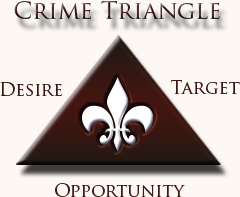
By targeting habitual criminals and utilizing the criminal trespass law, the opportunity and ability to
commit crimes may be drastically reduced. More importantly, the desire may be decreased.
Historically, crime prevention specialists have argued that criminal “opportunity” and “ability” are
the only elements that citizens and law enforcement officials may control and influence.
Fortunately, this belief is false. To the contrary, private citizens may wield tremendous influence
over the “desire” element of the crime triangle. Society is built and operates upon a theory of social
norms that is best explained through Maslow’s Hierarchy of Needs Model. According to Maslow,
there appears to be a hierarchy into which human needs arrange themselves.
commit crimes may be drastically reduced. More importantly, the desire may be decreased.
Historically, crime prevention specialists have argued that criminal “opportunity” and “ability” are
the only elements that citizens and law enforcement officials may control and influence.
Fortunately, this belief is false. To the contrary, private citizens may wield tremendous influence
over the “desire” element of the crime triangle. Society is built and operates upon a theory of social
norms that is best explained through Maslow’s Hierarchy of Needs Model. According to Maslow,
there appears to be a hierarchy into which human needs arrange themselves.
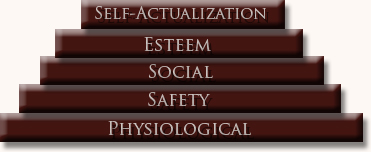
The physiological needs tend to have the highest strength for need until they are at least partially satisfied. These are the basic needs to sustain life itself such as
food, clothing, and shelter. Until these needs are satisfied, the majority of a person’s activity will focus on fulfilling these needs. Other levels provide little
motivation. Upon gratification of the physiological needs, the second level, safety, becomes predominant. Each progressive level provides the behavioral motivation
to guide the person.
Historically, the predication of human survival was firmly based in humans acting in small cohesive units to fend off predatory beasts and the elements of nature.
Humans had a vested interest in supporting each other and typically did not commit criminal acts within their respective communities. The proverbial caveman had
neither the time nor motivation to commit criminal acts within their community. To do so would jeopardize their safety and security.
The advent of civilization spawned new problems, such as rampant crime. From the beginning of recorded civilization, anti-social behavior and crime have been
present in varying degrees and for various reasons. The seventeenth century street urchins and pickpockets of England are prime examples. Many of the thieves
were mere children and were dealt with harshly. Although the penalty was sometimes death, these thieves were not deterred because if they did not steal, they
could not eat, and if they did not eat, they could not live. Their crimes were for survival.
In modern times, the physiological and safety needs are met through social programs and other government intervention, such as welfare and law enforcement.
Most criminals commit crimes for social, esteem, and self-actualization purposes, not for survival. The worst ghettos in America cannot hold a candle to the harsh
realties of either the western frontier of the 1800s or colonial life during our Nation’s Revolutionary period. For all intents and purposes, people in the United States
today will neither die from hunger, the elements of nature, wild animals, nor marauding gangs of vigilantes. Simply put, their physiological and safety needs are
sufficiently met. Thus, a person’s actions are motivated by social, esteem, and self-actualization needs. Since criminal conduct is predicated by the aforementioned
motivations, tolerance of the behavior should be either minimal or non-existent.
Only after identifying the source of a person’s desire, can it be properly addressed and perhaps adjusted by outside influences. In looking at the last three hierarchy
needs, money and social status tend to be the overwhelming motivation of behavior. For some, religious motivation is substantial, but that is a discussion outside the
scope of this project. Unless incarcerated for life, incarceration fails to have the desired result on motivation of the criminal. Within certain cultures of American
society, a person’s social status is raised after an arrest and/or incarceration period. Rather than limit a person’s motivation for anti-social behavior, an arrest and/or
incarceration may have the opposite effect and perpetuate it. This does not mean that arrest and/or incarceration is not important and viable, it simply means that
alternative methods need to be utilized. Criminal behavior is like bacteria. It can adapt to the medication. The medicine that worked twenty years ago is no longer
effective. A new alternative is needed to supplement the medication. In this case, the United Wisdom alliance is needed to supplement the arrest and incarceration
aspect of our criminal justice system.
In order to have a meaningful social status, the person must have the ability to physically be with the group during events and gatherings. In the case of the United
Wisdom alliance, the criminals will be unable to be at any event that is held on an alliance property. If criminals attempt to attend the event, they will be removed.
As a social consequence and as part of the United Wisdom concept, any person that is with the banned person on any of the allied properties will be issued a single
day suspension. This essentially means that if the criminal joins his/her social group on any of the allied properties, the entire event is jeopardized. Whether it is a
dinner, a movie, or shopping experience, the mere presence of the criminal will stop the entire event. The criminal will be rendered socially and economically
unviable within the community.
Although it is true that every private property within the city may join the alliance, the habitual criminal may still survive. The person is welcome to remain upon
public property. In order to purchase essentials, the criminal has two options. Either friends or family may do the shopping or the criminal may enter any property
that is not part of the alliance. Theoretically, criminals may have to leave a community to shop. This is acceptable and is weighed against the damage they have
caused the community. Their dilemma is easily rectified. By simply adjusting their patterns of behavior to a socially acceptable level, they will be embraced with
open arms back into the community.
If the concept goes national, which is the desired result, the bar and ban will be held within the respective communities. If the criminal moves to a different
community, they will have a fresh start. If there is a United Wisdom alliance in Kansas City, the person banned from the Topeka United Wisdom alliance may freely
move about the properties in Kansas City so long as they do not resume their criminal behavior. The United Wisdom alliance will work because it targets all three
elements of the crime triangle.
food, clothing, and shelter. Until these needs are satisfied, the majority of a person’s activity will focus on fulfilling these needs. Other levels provide little
motivation. Upon gratification of the physiological needs, the second level, safety, becomes predominant. Each progressive level provides the behavioral motivation
to guide the person.
Historically, the predication of human survival was firmly based in humans acting in small cohesive units to fend off predatory beasts and the elements of nature.
Humans had a vested interest in supporting each other and typically did not commit criminal acts within their respective communities. The proverbial caveman had
neither the time nor motivation to commit criminal acts within their community. To do so would jeopardize their safety and security.
The advent of civilization spawned new problems, such as rampant crime. From the beginning of recorded civilization, anti-social behavior and crime have been
present in varying degrees and for various reasons. The seventeenth century street urchins and pickpockets of England are prime examples. Many of the thieves
were mere children and were dealt with harshly. Although the penalty was sometimes death, these thieves were not deterred because if they did not steal, they
could not eat, and if they did not eat, they could not live. Their crimes were for survival.
In modern times, the physiological and safety needs are met through social programs and other government intervention, such as welfare and law enforcement.
Most criminals commit crimes for social, esteem, and self-actualization purposes, not for survival. The worst ghettos in America cannot hold a candle to the harsh
realties of either the western frontier of the 1800s or colonial life during our Nation’s Revolutionary period. For all intents and purposes, people in the United States
today will neither die from hunger, the elements of nature, wild animals, nor marauding gangs of vigilantes. Simply put, their physiological and safety needs are
sufficiently met. Thus, a person’s actions are motivated by social, esteem, and self-actualization needs. Since criminal conduct is predicated by the aforementioned
motivations, tolerance of the behavior should be either minimal or non-existent.
Only after identifying the source of a person’s desire, can it be properly addressed and perhaps adjusted by outside influences. In looking at the last three hierarchy
needs, money and social status tend to be the overwhelming motivation of behavior. For some, religious motivation is substantial, but that is a discussion outside the
scope of this project. Unless incarcerated for life, incarceration fails to have the desired result on motivation of the criminal. Within certain cultures of American
society, a person’s social status is raised after an arrest and/or incarceration period. Rather than limit a person’s motivation for anti-social behavior, an arrest and/or
incarceration may have the opposite effect and perpetuate it. This does not mean that arrest and/or incarceration is not important and viable, it simply means that
alternative methods need to be utilized. Criminal behavior is like bacteria. It can adapt to the medication. The medicine that worked twenty years ago is no longer
effective. A new alternative is needed to supplement the medication. In this case, the United Wisdom alliance is needed to supplement the arrest and incarceration
aspect of our criminal justice system.
In order to have a meaningful social status, the person must have the ability to physically be with the group during events and gatherings. In the case of the United
Wisdom alliance, the criminals will be unable to be at any event that is held on an alliance property. If criminals attempt to attend the event, they will be removed.
As a social consequence and as part of the United Wisdom concept, any person that is with the banned person on any of the allied properties will be issued a single
day suspension. This essentially means that if the criminal joins his/her social group on any of the allied properties, the entire event is jeopardized. Whether it is a
dinner, a movie, or shopping experience, the mere presence of the criminal will stop the entire event. The criminal will be rendered socially and economically
unviable within the community.
Although it is true that every private property within the city may join the alliance, the habitual criminal may still survive. The person is welcome to remain upon
public property. In order to purchase essentials, the criminal has two options. Either friends or family may do the shopping or the criminal may enter any property
that is not part of the alliance. Theoretically, criminals may have to leave a community to shop. This is acceptable and is weighed against the damage they have
caused the community. Their dilemma is easily rectified. By simply adjusting their patterns of behavior to a socially acceptable level, they will be embraced with
open arms back into the community.
If the concept goes national, which is the desired result, the bar and ban will be held within the respective communities. If the criminal moves to a different
community, they will have a fresh start. If there is a United Wisdom alliance in Kansas City, the person banned from the Topeka United Wisdom alliance may freely
move about the properties in Kansas City so long as they do not resume their criminal behavior. The United Wisdom alliance will work because it targets all three
elements of the crime triangle.
| Has this concept worked before? |
In 2002 Bradley Rhodd, President, United Wisdom, LLC, enlisted the owners and/or property managers of 221 properties in Topeka, Kansas to target reoccurring
problems on the premises. These properties were plagued with fights, thefts, burglaries, and other problems. Legitimate customers were intimidated and as a result
the economic viability of the businesses decreased. Since the problems were mainly in the evening, the ban was only in effect from 7 p.m. to 7 a.m. If a person
was caught either loitering or committing a crime on any one of the properties, the person was barred and banned from all of the properties. Any person that
returned during the assigned time was cited for criminal trespass and/or arrested. In all, 240 persons were banned from the properties. Of the persons banned,
only 17 criminal trespass tickets were issued and 3 were taken to jail. Out of the 17 cited, only one returned a third time. She did not return a fourth time.
The results of the test program were astonishing. During the 4 month period measured from one year to the next, calls for police service on the properties
decreased an average of 50% (June -50%, July -46%, August -56%, and September -48%). There was a 60% average drop in calls for disturbances throughout
the four month period. The last month displayed the largest decrease with 75% less disturbance calls than the prior year. Burglaries and thefts/forgeries reported
during this time also decreased by 73% and 29% respectively.
With such a large decrease in calls for service, it is only natural to assume that there was a greater police presence in the area during this time. The converse is
true. There was a sharp decrease in police presence in the area, which is shown by the decrease of self-initiated activities by officers. A self-initiated activity is any
activity, such as a car stop, where a citizen does not specifically request an officer. In June, there was a 10% decrease self-initiated activities, followed by
decreases of 25% in July, 55% in August, and 59% in September. Summarily, although only a fraction of the officers were utilized compared to the prior year,
there was a sharp and substantial decrease in criminal activity on the properties within the alliance. This resulted in a better efficiency of law enforcement while
producing a more safe and secure shopping environment for Topeka residents.
problems on the premises. These properties were plagued with fights, thefts, burglaries, and other problems. Legitimate customers were intimidated and as a result
the economic viability of the businesses decreased. Since the problems were mainly in the evening, the ban was only in effect from 7 p.m. to 7 a.m. If a person
was caught either loitering or committing a crime on any one of the properties, the person was barred and banned from all of the properties. Any person that
returned during the assigned time was cited for criminal trespass and/or arrested. In all, 240 persons were banned from the properties. Of the persons banned,
only 17 criminal trespass tickets were issued and 3 were taken to jail. Out of the 17 cited, only one returned a third time. She did not return a fourth time.
The results of the test program were astonishing. During the 4 month period measured from one year to the next, calls for police service on the properties
decreased an average of 50% (June -50%, July -46%, August -56%, and September -48%). There was a 60% average drop in calls for disturbances throughout
the four month period. The last month displayed the largest decrease with 75% less disturbance calls than the prior year. Burglaries and thefts/forgeries reported
during this time also decreased by 73% and 29% respectively.
With such a large decrease in calls for service, it is only natural to assume that there was a greater police presence in the area during this time. The converse is
true. There was a sharp decrease in police presence in the area, which is shown by the decrease of self-initiated activities by officers. A self-initiated activity is any
activity, such as a car stop, where a citizen does not specifically request an officer. In June, there was a 10% decrease self-initiated activities, followed by
decreases of 25% in July, 55% in August, and 59% in September. Summarily, although only a fraction of the officers were utilized compared to the prior year,
there was a sharp and substantial decrease in criminal activity on the properties within the alliance. This resulted in a better efficiency of law enforcement while
producing a more safe and secure shopping environment for Topeka residents.
| To join today or for more information click -here- or go to the contact page. |